Monday, September 16, 2024

That's My Pup (1953)


This short film marks the third appearance of Tyke, the small son of Spike the Bulldog. It is also the first appearance of this character since Slicked Up Pup (1951). After this short the character would appear more frequently in the Tom and Jerry cartoons. It would be less than a year before he appeared in another cartoon. In 1957 Spike and Tyke would receive a short-lived cartoon series of their own, though that would only last two cartoons. 

In this short film Spike wants to teach Tyke the basics of being a dog. This includes how to chase cats. To make sure his son does well Spike threatens Tom if he doesn't let Tyke chase him. Jerry overhears this and feels he can use this to get back at his foe.

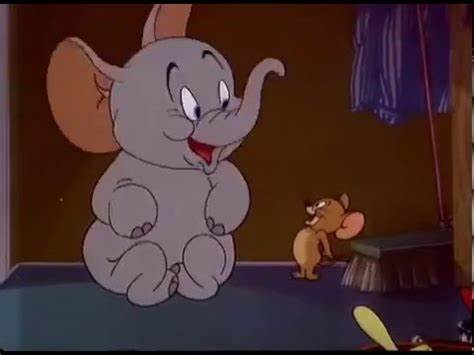
This is a delightful short and one of the best cartoons to feature Tyke. This film reminds me of the Tom and Jerry cartoons of the 1940's with the sheer wealth of great gags. One of my favorite gags is when Jerry is barking at Tom pretending to be Tyke. The character animation of Jerry gleefully doing this while being down on all fours like Tyke is hilarious. The punchline at the end of the gag is also laugh out loud funny. The way Tom uses a fake cat tail to trick Tyke is also very funny. This film also has one of the best Tex Avery inspired giant takes in a Tom and Jerry cartoon (pictured above). Seeing Tom coming out of his fur, while having underwear underneath it, is very funny. Once again, the pacing here is simply wonderful. William Hanna was a master at comic timing, and he is fully at the top of his game here. The whole cartoon moves at a wonderfully quick pace. This not only allows every gag to land perfectly but gives the whole short a delightfully fun comic energy. 

The credited animators on this film are Ed Barge, Ray Patterson, Kenneth Muse and Irven Spence. The credited background artist is Robert Gentle. 

Below is the movie poster for this film. Once again it reuses the same artwork as the past few shorts. 


Monday, September 9, 2024

Johann Mouse (1953)


Note: Spoilers ahead.

This short film marked the seventh and last Tom and Jerry cartoon to win the Academy Award to win the Academy Award for Best Animated Short Film (and the 75th Tom and Jerry short overall). It's competition this year was Little Johnny Jet (1953, MGM), Madeline (1952, UPA), Pink and Blue Blues (1952, UPA, starring Mr. Magoo) and The Romance of Transportation in Canada (1952, National Film Board of Canada). Though not the first (this was also true of 1950), this is one of the earliest years in which a Disney film was not nominated. This shows how at this time critical and public tastes where switching from the lush animation of Disney to the more stylized modern art approach from the UPA studio. This change in taste also helps us understand why no more Tom and Jerry shorts would win after this. 

In this short film, Tom and Jerry live in the home of the infamous composer Johann Strauss. Jerry finds himself unable to stop himself from dancing whenever Strauss plays. Every time this happens Tom takes this chance to try and catch Jerry. However, when Strauss leaves on a trip, Tom wonders how he will get Jerry to come out of his hole. Tom then learns to play piano. Just when he is just about to catch Jerry the two are discovered by the servants, who are amazed to see a cat play the piano and a mouse dance. Before long the two are performing before the emperor himself. 

This is a very charming cartoon. The film has a wonderful storybook feel to it. This comes from both the narration (provided by character actor Hans Conried (animation fans might know him for voiced both Captain Hook and George Darling in Disney's Peter Pan (1953))) and the wonderful art style. The use of actual storybook pages with storybook style illustrations of the characters are especially wonderful. This helps this film stand out as something that feels unique among the other entries in this series. That is something that is rare in a cartoon series that has been around over a decade, but it is very true here. This cartoon also benefits from some wonderful character animation, especially when Jerry is dancing, and a wonderful use of Strauss' classical pieces. The only real problem here is that there is not as many laughs here as you might expect. This film only really has one good gag (Tom's piano lesson). However, I will admit it is a great one. 

The credited animators on this film are Kenneth Muse, Ray Patterson, Ed Barge and Irven Spence. The credited background artist is Robert Gentle. Hans Conried receives a voice credit making him the first voice artist to receive credit on a Tom and Jerry cartoon. Though Scott Bradley receives the music credit. Jakob Gimpel is given a credit stating, "Piano Arrangements Created and Played by." Jakob Kimbell was a respected concert pianist and music professor. He would also work as a film composer on such movies as Gaslight (1944), Possessed (1947), Letter from an Unkown Woman (1948) and Planet of the Apes (1968). He also played piano on the Bugs Bunny cartoon, Rhapsody Rabbit (1946). A scene from Johann Mouse would later be reused in the cheater Tom and Jerry short, Shutter Bugged Cat (1967). 

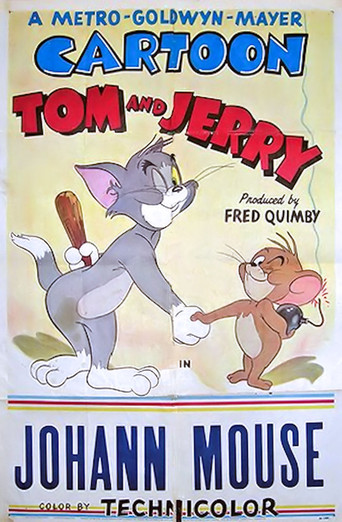
Below is the movie poster for this film. It is the same one that was used for the last couple cartoons, only with the title changed. 


Resources Used

Of Mice and Magic: A History of American Animated Cartoons by Leonard Maltin

https://tomandjerry.fandom.com/wiki/Johann_Mouse


Tuesday, September 3, 2024

Jerry and Jumbo (1953)


This short film is another example of a cartoon where Jerry befriends another animal and most help protect him from Tom. In this case it is Jumbo the Elephant. This marks Jumbo's only appearance in a Tom and Jerry cartoon (either theatrical or for TV). However, the character would appear in the mobile game, Tom and Jerry Chase. Jerry would however later befriend another elephant in the Chuck Jones short, Jerry Go Round (1966). 

As this short film starts a circus train is passing by, and a baby elephant falls out. Jerry quickly makes friends with this elephant. Yet when Jumbo takes Tom's food (though he doesn't see the elephant), the cat becomes very angry.

This is an incredibly clever cartoon. While it starts off as simply another film where Jerry makes a new friend, it soon takes a very clever turn. The mind games that Jerry and his new friend play on Tom are not only very clever but they are laugh out loud hilarious. Not only are the gags very clever but they are perfectly delivered. Once again, William Hanna's timing is not nearly perfect, it is perfect. The wild takes that Tom does are truly hilarious. They are incredibly over the top but at the same time compliment both the story and the gags rather than detract from them. The ending gag of this film is especially wonderful and cracks me up every time. I also love how this cartoon is completely without dialogue, yet the great character animation makes all the characters seem completely real. 

The credited animators on this film are Kenneth Muse, Irven Spence and Ed Barge. Robert Gentle is the credited background artist, receiving his third screen credit on a Tom and Jerry cartoon. William Hanna and Joseph Barbera would later reuse the gag of an elephant sucking up peanuts with his trunk and making them seem to march towards him in the Ruff and Reddy TV series during a storyline entitled Pinky, the Pint-Sized Pachyderm (1958). This short was released to movie theaters in 1958 and 1959. It is available on the DVD set, Tom and Jerry Spotlight Collection Vol. 2

The following is an exhibitor's review from the Motion Picture Herald, "JERRY AND JUMBO: Tom & Jerry Technicolor Cartoon — This is one of the best of this popular series. Will keep any audience in stiches. - Bob Walker, Uintah Theatre, Fruita, Col." 

The following movie poster is again a repeat of the poster we have seen the last two times, only with the title changed. 


Thursday, August 29, 2024

The Missing Mouse (1953)


This short film marked the first Tom and Jerry cartoon of 1953 (and the 73rd Tom and Jerry short overall) and was strong start for that year. 

In this short film, some white shoe polish pours on top of Jerry and makes him appear to be a white mouse. Meanwhile Tom hears over the radio that a white mouse has consumed a secret explosive and escaped from a scientific laboratory. Seeing Jerry look like a white mouse, Tom gets very frightened. Jerry decides to use this to his advantage and get revenge on his foe. 

This is a delightful cartoon. The premise itself is very clever and provides a delightful twist on the classic Tom and Jerry formula. This premise makes this film stand out while still holding everything that we love about Tom and Jerry. While this may not have the sheer number of great gags that are in the 1940's shorts, there are some truly wonderful comedic moments here. The bit where Tom turns into an old man cat and the ending gag are truly hilarious. This film also benefits from some truly wonderful character animation. Once again this makes these characters feel completely real to us.

This is a rare Tom and Jerry cartoon of this time period, where the music credit goes to someone other than Scott Bradley. In fact, this marks the first Tom and Jerry short to have someone else in charge of the music. The music credit goes to Edward Plumb. Plumb is best known for his work at the Disney studio, where he did music for many Disney films, both live action and animation. Some of the Disney feature length films he did music on include Fantasia (1940), Dumbo (1941), Saludos Amigos (1942), The Three Caballeros (1944), Peter Pan (1953), The Living Desert (1953), The Vanishing Prairie (1954), Davy Crockett: King of the Wild Frontier (1955), Lady and the Tramp (1955), Davy Crockett and the River Pirates (1956) and Johnny Tremain (1957). Some Disney short films he worked on include Donald's Crime (1945), Water Birds (1952), The New Neighbor (1953), How to Sleep (1953) and Donald's Diary (1953). His non-Disney credits include Girl Trouble (1942), You Were Never Lovelier (1942), Monsieur Beaucaire (1946), The Great Lover (1949), Father Is a Bachelor (1950), The Painted Hills (1951), That's My Boy (1951) and Angels in the Outfield (1951). 

The credited animators on this film include Ray Patterson, Ed Barge, Kenneth Muse and Irven Spence. Robert Gentle is the credited background artist. A clip from this short would later be used in the Tom and Jerry cheater cartoon, Matinee Mouse (1966). Jerry would later be disguised as a white mouse again in Mouse for Sale (1955), Buddies Thicker Than Water (1962, where he pretends to be a ghost) and an episode of Tom and Jerry Tales called Bats What I Like About the South (2006).

Below is the poster for this film. Notice it is the same poster used for The Dog House (1952), just with the title changed. This poster will be seen a lot from now on. Luckily it is much more pleasant to look at than some of the earlier Tom and Jerry posters. 


Monday, August 19, 2024

The Dog House (1952)


This short film marks the last Tom and Jerry cartoon to be released in 1952 (and the 72nd Tom and Jerry short overall), ending the year on a strong note. 

In this short film, Spike is trying to build himself a new doghouse. However, when Tom (while chasing Jerry) accidently knocks over the doghouse, Spike tells him that if he damages the house again there will be murder. Tom has to try to catch Jerry without damaging Spike's house, which proves to be a lot more difficult than it sounds.

This is a delightful little short. The basic storyline has been done before and would be done again. However, it is very well handled here. Plus, the point of this cartoon is not the story but the comedy. This cartoon features a rapid succession of gags. While these gags may not be as laugh out loud funny as some of the gags in the 40's shorts, many of them put a real smile on my face. William Hanna is at the top of his game when it comes to his comic timing here. Not only are the gags perfectly timed, but the way they are delivered one after another creates a pure comic energy that I find very hard to resist. It just makes this whole film tons of fun and even made me enjoy the gags that I may not have even laughed at. Again, the character animation for all three characters is perfect making each of them feel completely real to us.

The credited animators on this film are Kenneth Muse, Irven Spence, Ray Patterson and Ed Barge. John Didrik Johnsen was credited as the background artist for this cartoon, making this the second Tom and Jerry film to credit the background artist. As well as doing background art for the Hanna and Barbera Tom and Jerry shorts, Johnson also did background art for other MGM cartoons, including those directed by Tex Avery and Dick Lundy. The scene with Tom breaking a hole through the door was reused from Love That Pup (1949). This film is available on the DVD set Tom and Jerry Spotlight Collection, Vol. 3 and the DVDs, Tom & Jerry's Greatest Chases Vol. 5Tom and Jerry: In the Dog HouseTom and Jerry: Pint-Sized Pals and Tom and Jerry: Classic Collection Volume 3.

Below is the movie poster for this film. Note how it has nothing to do with the cartoon itself. 


Monday, August 12, 2024

Cruise Cat (1952)


Cruise Cat marks an interesting first in Tom and Jerry's filmography. With Robert Gentle's name being credited in the opening titles, this film marks the first time a background artist would be credited in a Tom and Jerry cartoon. Robert Gentle would not only work with William Hanna and Joseph Barbera on these theatrical shorts but also many of the Hanna-Barbera TV cartoons. He worked on such Hanna-Barbera shows as The Huckleberry Hound Show, The Yogi Bear Show, Quick Draw McGraw, Top Cat, The Flintstones, Wacky Races, Scooby-Doo Where Are You, Super Friends and many more.  

In this short film, Tom is the mascot on a cruise ship and his one job is to keep mice off. Of course, when Jerry comes on board this ends up being a much more difficult job than he bargained for.

While this may not rank among the best Tom and Jerry cartoons, it is a very fun watch. Few of the gags are as laugh out loud funny as the ones in the 40's Tom and Jerry shorts. However, many of them do make me smile and each of them worked well enough. The basic story may be familiar, but the cruise ship proves to be a wonderful setting and gives the short a unique feel. The background art may be simply, but it is very effective and charming. There is something about it that is simplistic but completely charming. Both Tom and usual are their usual wonderful selves. Even though the character animation may not be as elaborate as in previous shorts, it is still very expressive and helps bring these characters to life. William Hanna's comic timing is still as great as ever. While this may not be the funniest Tom and Jerry short, it has a wonderful sense of comic energy throughout. 

This film features a scene where they enter the ship's movie theatre. Playing at that theater was the Tom and Jerry cartoon, Texas Tom (1950). The cat and mouse stop their fighting to watch themselves. However, when each laugh at a moment in Texas Tom where the other gets hurt they get angry and begin fighting again. This is a clever scene that always puts a smile on my face. This basic premise of this scene greatly resembles the later Tom and Jerry short, Matinee Mouse (1966). In that film Tom and Jerry would call a truce and go to the movies together. However, when their cartoons start playing, the two end up laughing at each other and fighting again. 

The credited animators on this film are Irven Spence, Ray Patterson, Ed Barge and Kenneth Muse. It is the 71st Tom and Jerry short overall. It is available on the DVD set, The Tom and Jerry Spotlight Collection Vol. 2

 An episode of Hanna-Barbera's TV show, The Tom and Jerry Show would be named Cruise Kitty (1975). In that TV cartoon, Spike is hired as head of security on a cruise ship, while Tom and Jerry are stowaways. Spike tries to tell the captain about Tom and Jerry, but the captain never notices the cat and mouse. 

Below is the movie poster for this film. It gives us a nice shot of Tom's butt as well as a very off model Jerry. 


Monday, August 5, 2024

Push-Button Kitty (1952)


Though Push-Button Kitty seems like just another Tom and Jerry short, it actually does have some historical significance. It is the last appearance of Tom's original owner (often referred to by fans as Mammy Two-Shoes). However, she would be brought back much later for the TV series Tom and Jerry Tales. There she would be renamed Mrs. Two-Shoes and instead of being the black stereotype seen in the theatrical cartoons, she is white in that series. With the cartoon Pet Peeve (1954), Tom would have new owners a couple named George and Joan. With Push-Button Kitty being the last appearance of Tom's original owner, it is appropriate that she plays a larger role here than usual. 

In this short film, Tom's owner gets a new robotic cat to help her get rid of Jerry. The robotic cat is very good at this job. It throws Jerry out of the house and Tom is not happy about being replaced. The two foes team up to get rid of this mechanical menace.  

This is a very fun cartoon. The premise is a delightfully clever one and the ways that Tom and Jerry get revenge on the robot cat are incredibly clever. This clever story really helps this film stand out among the many Tom and Jerry cartoons. Even the various methods that the robotic cat uses to catch Jerry are very clever and creative. It is also always a delight to see Tom and Jerry team up together. It is wonderful how this can be done while keeping both of them fully in character. It just shows how strong of characters both of them are. There may not be the sheer wealth of great gags that are in the Tom and Jerry cartoons of the 1940's. However, the great gags there are here are truly funny. The final gag is absolutely hilarious.   

The credited animators on this film are Irven Spence, Ed Barge and Kenneth Muse. This is the 70th Tom and Jerry theatrical cartoon overall. The film is available on the DVD set, The Tom and Jerry Spotlight Collection Vol. 2. This cartoon would essentially be remade as the Tom and Jerry Tales episode, Tin Cat of Tomorrow (2007).

Below is the typically ugly movie poster for this film. 


The Karate Guard (2005)

  When I started this blog, my goal was to review every one of the theatrically released Tom and Jerry short films. Well, I have finally rea...